06/01/2026
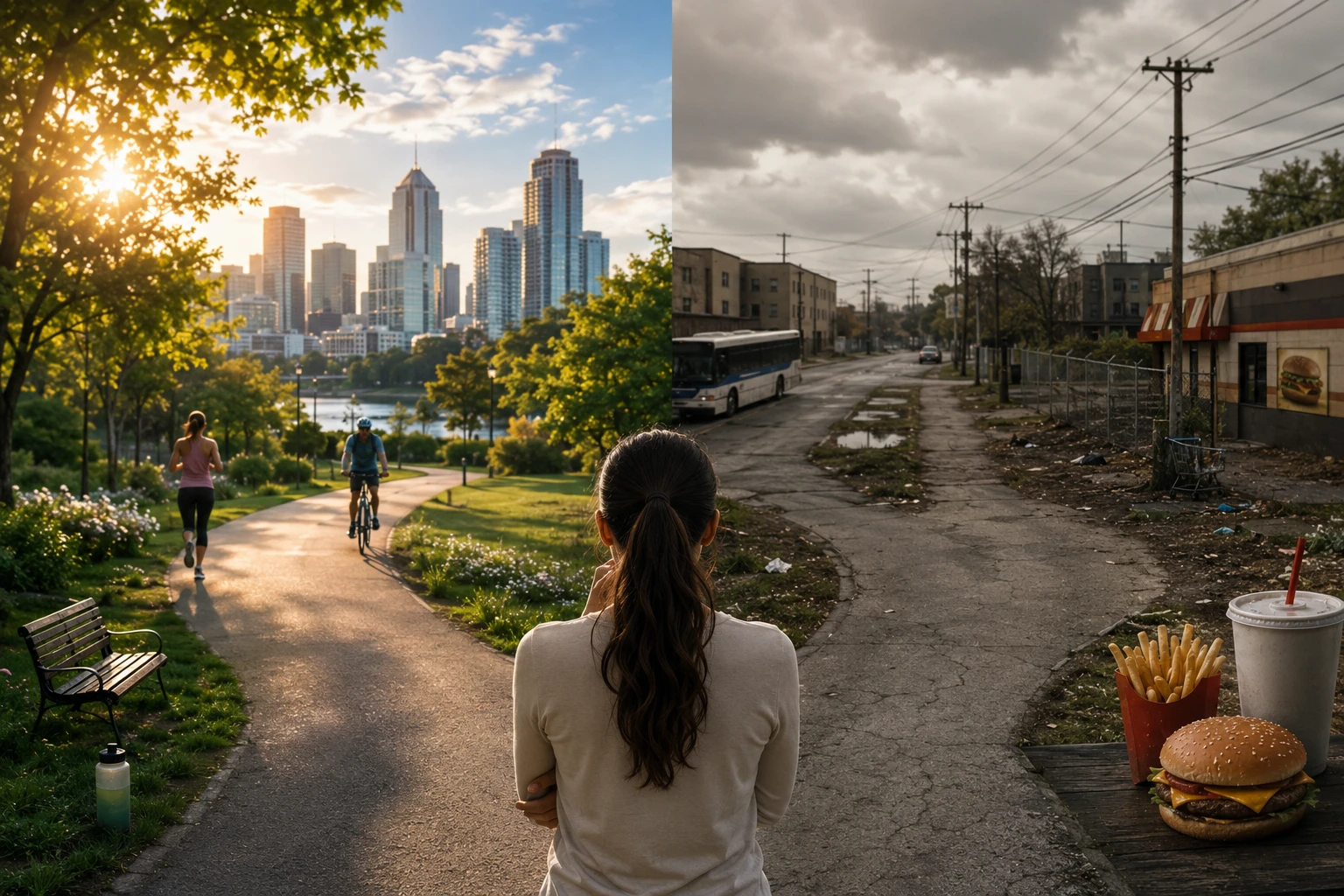
There’s a growing phrase in healthcare that says a person’s zip code may matter more than their genetic code—and honestly, the longer I practice medicine, the more truth I see in that statement…
This concept isn’t new to me. In fact, it takes me all the way back to my undergraduate years at the University of Florida, where I studied Nutritional Sciences and pursued a Minor in Health Disparities in Society. One of the most influential mentors during that time was Dr. Laura Guyer, whose leadership and courses challenged me to think beyond biology and examine the social, economic, and environmental forces that shape health outcomes.
Long before I became a PA-C, before Functional Medicine training, and before Lifestyle Medicine became such a central part of my professional identity, I was learning that health is about far more than what happens inside a clinic. Dr. Guyer helped me appreciate that where people live, learn, work, and play often influences health just as much as any diagnosis or treatment plan. Over 15 years later, that lesson continues to shape how I care for patients and how I view health promotion within our communities.
We often think of health through the lens of diagnoses, medications, lab values, or family history. But some of the greatest influences on health are much less visible: the neighborhoods we live in, the safety of our streets, our access to parks or sidewalks, the stress of long commutes, social connectedness, and whether healthy choices are realistically accessible in everyday life.
According to Healthy People 2030, these are known as Social Determinants of Health (SDOH): the conditions in which people are born, live, work, learn, and age. These factors influence everything from physical activity and sleep quality to stress levels and emotional well-being. [https://odphp.health.gov/healthypeople/priority-areas/social-determinants-health]
What made this concept feel even more tangible for me recently in one of my doctoral courses was looking at life expectancy differences right here in Florida. [https://www.rwjf.org/en/insights/our-research/interactives/whereyouliveaffectshowlongyoulive.html?rid=0034400001rmGcjAAE&et_cid=1853085]
My parents live on the opposite coast from me, and I travel back and forth often across the state—especially now that my sweet 7-month-old nephew, Noah, has made them first-time grandparents. Somewhere between those long drives across the state, I found myself reflecting on how different communities can shape daily life and long-term health.
In Volusia County, average life expectancy is approximately 76 years, while in Pinellas County, it is closer to 79 years. Three years may not sound dramatic at first glance, but when viewed across populations, families, and generations, that gap becomes incredibly meaningful.
Even within the same state, environment matters.
The evidence continues to grow through organizations like the American College of Lifestyle Medicine, showing that many chronic conditions—including cardiovascular disease, diabetes, obesity, and depression—are shaped not only by personal choices, but also by the environments surrounding those choices. [https://pmc.ncbi.nlm.nih.gov/articles/PMC10979727/]
For example:
- Limited walkability or unsafe neighborhoods can reduce physical activity
- Long commutes and poor infrastructure often increase stress and sedentary behavior
- Lack of green space impacts mental restoration and emotional health
- Social isolation within communities affects longevity and quality of life
In clinical practice, I’ve learned that even the most motivated patients can struggle to sustain healthy habits when their environment does not support them.
Sometimes the most important questions are not:
“What medication should we start?”
…but instead:
“Do you feel safe in your home and walking outside?”
“What does your neighborhood allow you to do for your health?”
“Do you have spaces that support rest, movement, and connection?”
“Where are your local sources for affordable fresh produce”
“Do you have a support system that you can count on?”
Those conversations often reveal barriers that no prescription alone can fix.
Over the years, I’ve also been grateful for opportunities to contribute to lifestyle medicine initiatives focused on bridging these gaps—from curriculum development around nutrition, movement, sleep, and stress resiliency, to supporting clinician education and community-based wellness strategies. One of the most meaningful parts of this work has been helping others recognize that sustainable health is rarely about willpower alone. It is about creating environments where healthier choices become more feasible, accessible, and supported!
Genetics absolutely matter. They provide part of the blueprint…
But environment, lifestyle, and daily lived experiences often determine how that blueprint unfolds over time.
As I often hear pioneers in lifestyle-forward medicine say:
Phenotypes go hand-in-hand with genotypes… genetics may load the gun, but lifestyle pulls the trigger.
And sometimes, the zip code determines just how difficult it is to put that safety on.
Until next time,
~Nhi Do, PA-C, FMCP-M, DipACLM
P.S. This post is a chance for me to honor Dr. Laura Guyer, PhD, MEd, RDN, who clearly planted seeds that continue to bear fruit in my work and advocacy many, many years later. Many THANKS, Laura!