04/01/2026
This past month, I’ve been reflecting more intentionally on what it truly means to deliver patient-focused, person-centered care—especially when we consider the broader context of social drivers of health and the full bio-psychosocial picture.
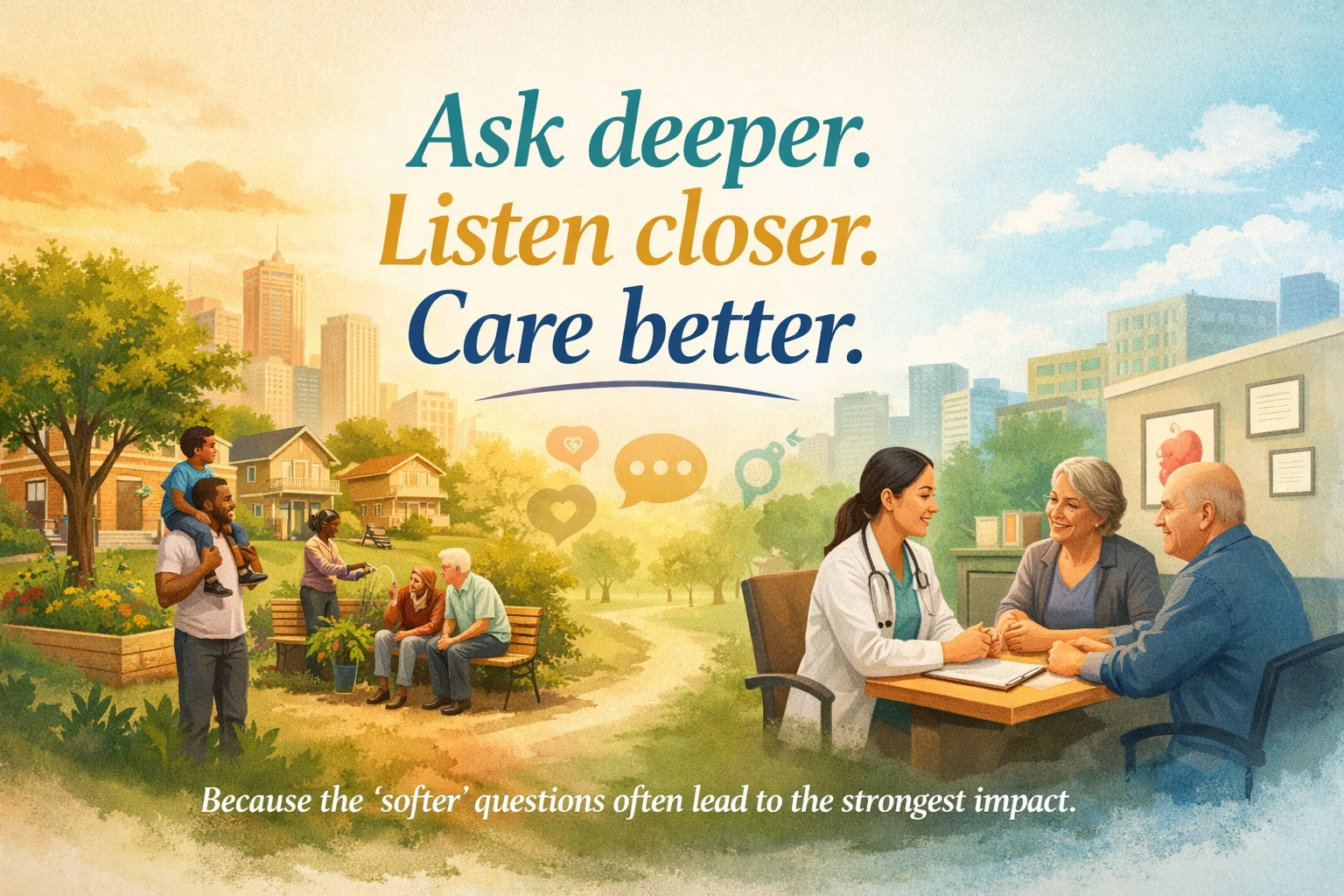
In lifestyle medicine, many of us find ourselves asking the “softer” questions—questions that weren’t always emphasized during our formal training, yet often reveal the most:
- Do you have access to green space?
- Do you feel safe walking in your neighborhood?
- Do you live in a food desert?
- What does your community look like?
These questions matter. They help us understand not just what patients should do—but what they are realistically able to do.
Because if we’re unable to fully embrace or embody the pillars of lifestyle medicine ourselves, it’s often a sign that additional support is needed. And when we recognize that, we create an opportunity—not just to support ourselves—but to extend that support to fellow clinicians, students in training, and anyone seeking to learn.
When science meets behavioral change, that’s where meaningful impact happens.
Even with medical training, navigating healthcare can feel complex. That perspective alone deepens my empathy for what our patients and caregivers experience every day.
One strategy that has consistently improved outcomes in my practice is the use of teach-back—especially when discussing medications and lifestyle changes. It often uncovers gaps in understanding that might otherwise go unnoticed, while also reinforcing confidence for both patients and caregivers.
I’ve also found it helpful to use health literacy–friendly materials written at a 6th–8th grade level. I frequently reference trusted, evidence-based resources from organizations like the American College of Lifestyle Medicine, Physicians Committee for Responsible Medicine, and the Institute for Functional Medicine.
In addition, I incorporate visual aids and short videos for those who prefer more interactive learning. I’ve curated a growing collection of these accessible resources on my site here to help bridge the gap between understanding and application. (www.nhimado.org/resources)
These tools, especially when paired with real-time discussion, tend to improve both engagement and retention. For caregivers, I make it a point to involve them directly and tailor education to their role in the patient’s daily life—because that’s often where implementation truly happens.
At the end of the day, education must be not only clear—but practical, inclusive, and culturally relevant—to truly make an impact!
Until next month,
~ Nhi Do, PA-C, FMCP-M, DipACLM